Experience sounds like a simple metric. More years mean more capability, right? Not always. A candidate with a decade of experience might be set in outdated methods. A candidate with three years might bring sharper skills and fresher energy.
The real question is not about years. It is about fit. What does your business actually need? What tasks will the assistant handle? What level of autonomy do you expect? Answering those questions first makes the hiring decision much clearer.
Why Experience Alone Does Not Guarantee Success
Resumes include dates and job titles. Resumes do not reflect what’s going on inside a person’s head. A candidate who has been in a large corporate entity for ten years will not do well in an entrepreneurial setting. The candidate is used to having structure and process.
On the other hand, a candidate with less experience but the right intuition can flourish. The candidate adapts quickly. The candidate asks the right questions and figures things out without being held by the hand. Experience is important, but there are times when experience does not mean everything.
The Experience Levels Explained
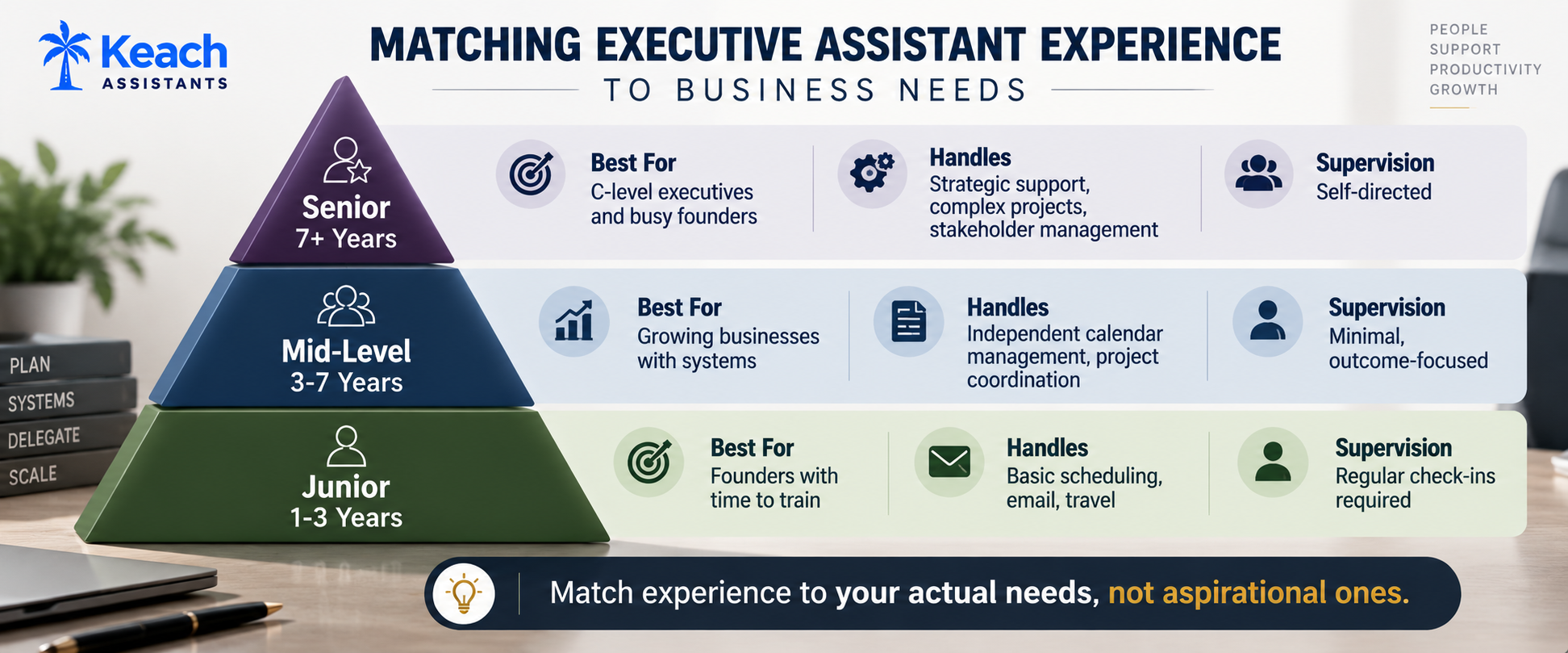
Executive assistants generally fall into three experience tiers. Understanding each helps you match candidates to your needs.
Junior Executive Assistant
Experience level ranges between one and three years. They manage the basic aspects of scheduling, emailing, and travel arrangements. They require frequent guidance and monitoring. Suitable for founders who have time to coach them.
Mid-Level Executive Assistant
Typically three to seven years of experience. They manage calendars independently, coordinate projects, and communicate with stakeholders. They need less supervision. Best for growing businesses with established systems.
Senior Executive Assistant
Seven or more years of experience. They anticipate needs, manage complex projects, and act as a true partner. They operate with minimal direction. Best for C-level executives and founders who need high-level support.
C-Level Executive Assistant Skills Assessment Checklist
Beyond experience, specific skills determine success. A C-level executive assistant skills assessment checklist helps you evaluate candidates objectively.
- Calendar management across time zones.
- Inbox triage and prioritization.
- Travel coordination, including international trips.
- Meeting preparation and follow-up.
- Stakeholder communication.
- Project coordination.
- Confidentiality and discretion.
- Technical proficiency with relevant tools.
- Problem-solving under pressure.
- Written and verbal communication.
Score candidates on each item. The total reveals strengths and gaps. No candidate is perfect. But the right combination matters more than a perfect score.
Wondering If Your Candidate Has the Right Skills?
Experience looks good on paper. Skills show up in practice.
Mid-Level vs Fractional Executive Assistant Experience Comparison
Not every business needs a full-time senior assistant. Mid-level vs fractional executive assistant experience comparison reveals different trade-offs.
A mid-level assistant works full-time. They handle daily tasks and grow into the role. They offer consistency and availability.
A fractional assistant works part-time across multiple clients. They bring senior-level experience at a lower commitment. They handle high-level tasks without full-time cost.
The right choice depends on your workload. If you need daily support, full-time makes sense. If you need strategic help a few hours weekly, fractional works better.
Risks Of Hiring Underqualified Executive Assistant For Founders
Choosing someone incapable of managing the task is bound to be problematic. The risks associated with hiring an underqualified executive assistant are failure to attend meetings, poor communication skills, and loss of potential.
An underqualified assistant will probably be unable to identify priorities. This assistant may bring out trivial issues and ignore essential matters. Communication with the stakeholder may become an issue. This will affect your reputation.
Costs associated with hiring the wrong individual go beyond wages. There is time wasted sorting out the issues that such assistants create.
Required Tech Stack Skills For Senior Remote Executive Assistant
Remote work requires specific technical competencies. Required tech stack skills for a senior remote executive assistant include proficiency with several categories of tools.
Communication Tools
Slack, Zoom, Microsoft Teams. The assistant must navigate these platforms fluently.
Calendar and Email
Google Workspace, Outlook, Calendly. Scheduling across time zones requires comfort with these systems.
Project Management
Asana, Trello, Monday. Tracking tasks and deadlines keeps projects on schedule.
Documentation
Notion, Google Docs, Confluence. Organizing information ensures nothing gets lost.
Password Management
1Password, LastPass. Security matters when handling sensitive access.
Verify these skills during the interview. Ask for specific examples of how they used each tool.
Matching Experience To Your Needs
The right experience level depends on your situation. A founder drowning in email needs a mid-level assistant who can take over inbox management. A CEO preparing for board meetings needs a senior assistant who can coordinate complex logistics.
This guide explains how to find your replacement as an executive assistant if you are planning a transition.
Here is a visual breakdown of matching experience to needs:
Understanding the Cost Factor
Experience affects cost. Senior assistants command higher rates. Before starting your search, understand the budget. This resource breaks down remote executive assistant costs in 2026 so you can plan accordingly.
The investment pays off when the fit is right. A skilled assistant saves hours every week. Those hours translate into revenue when you focus on growth activities.
Knowing What Kind of Support You Need
Some businesses hire an executive assistant when they really need an admin assistant. Or the reverse. This mismatch creates frustration on both sides.
Our article compares executive assistant vs. administrative assistant key differences and helps you choose the right role.
Mistakes That Derail the Hiring Process
Several mistakes consistently undermine new hires. Rushing the search leads to poor fits. Skipping reference checks leads to surprises. Failing to provide access leads to frustration.
Check out this breakdown of mistakes businesses make when hiring a remote executive assistant and how to avoid them.
The Complete Hiring Playbook
If you want a step-by-step process, this resource covers everything. The ultimate guide to hiring a high-level remote executive assistant walks through testing, onboarding, and setting expectations.
Testing Beyond The Resume
Resumes tell you what someone claims. Tests show you what they can do. Give candidates a simulated inbox with urgent requests, routine updates, and spam. Ask them to prioritize and respond. Watch how they handle competing demands.
Provide a messy calendar with double bookings. Ask them to resolve conflicts. See how they communicate with stakeholders. These exercises reveal judgment, not just organization.
Conclusion
How much experience should your executive assistant have? The answer depends on your needs, your budget, and your willingness to train. A junior assistant works if you have time to mentor. A senior assistant works if you need immediate strategic support. Keach Virtual Assistant helps businesses find candidates at every experience level. Match the person to the role. Then watch your productivity transform.
Ready to Find the Right Assistant?
Experience matters, but fit matters more.
FAQs
How much experience do you require from an executive assistant?
The required experience depends on your needs. For junior level, experience will be between one and three years. For mid-level, the experience required will be between three and seven years. The senior level requires at least seven or more years of experience.
What skill set should I check before hiring an executive assistant?
Calendar management, email management, trip planning, and communication will be among them. Technical skills for Slack, Google Suite, and project management tools should be checked too.
What is a fractional executive assistant?
A fractional assistant works on a part-time basis for various clients. They offer senior-level experience at a more affordable level. They are best for founders requiring strategic assistance without making a full-time commitment.
What is the risk of hiring underqualified assistants?
Underqualified assistants tend to be late, miscommunicate, and escalate irrelevant issues. This affects your professional image and makes you spend more time fixing the problems.
How do I determine whether the assistant has appropriate experience?
Put them to the test with relevant situations before hiring. You can provide them with a fake inbox and calendar. You will then learn about their communication skills and prioritization ability.