Hiring a remote executive assistant should make life easier. More time. Less stress. Better focus. But for many businesses, the opposite happens. The assistant feels lost. The executive stays overwhelmed. The relationship falls apart within months.
The problem is rarely the assistant. It is the hiring process and the setup. Businesses make predictable mistakes that undermine the entire arrangement. Understanding these mistakes helps you avoid them. It also helps you build a working relationship that actually delivers results.
Expecting Too Much Too Soon
Some businesses hire an assistant and expect instant transformation. They want everything handled perfectly from day one. That is unrealistic.
A remote executive assistant needs time to learn your preferences. They need to understand your systems, your communication style, and your priorities. The first few weeks involve training and adjustment.
Expecting an executive assistant to handle specialized marketing tasks is another common error. Most assistants excel at admin work. They are not graphic designers or copywriters. Piling marketing responsibilities onto their plate sets them up for failure.
Is Your Hiring Process Setting You Up for Failure?
Most businesses make at least one of these mistakes without realizing it.
Skipping Reference Checks on Overseas Virtual Executive Assistants
The global talent pool is appealing. Skilled professionals in different time zones offer flexibility and value. But some businesses skip reference checks when hiring internationally.
Skipping reference checks on overseas virtual executive assistant candidates is risky. Time zone differences make it harder to verify work history. Language barriers complicate communication. Without proper vetting, you might hire someone who looks great on paper but underperforms in reality.
Always check references. Ask for specific examples of past work. Speak with previous employers if possible. A little diligence upfront prevents major headaches later.
Delegating Tasks Without Granting Password Access or Tools
This mistake is surprisingly common. Businesses delegate tasks but fail to provide the access needed to complete them. The assistant cannot manage email without inbox access. They cannot update calendars without permissions. They cannot use tools they were never given.
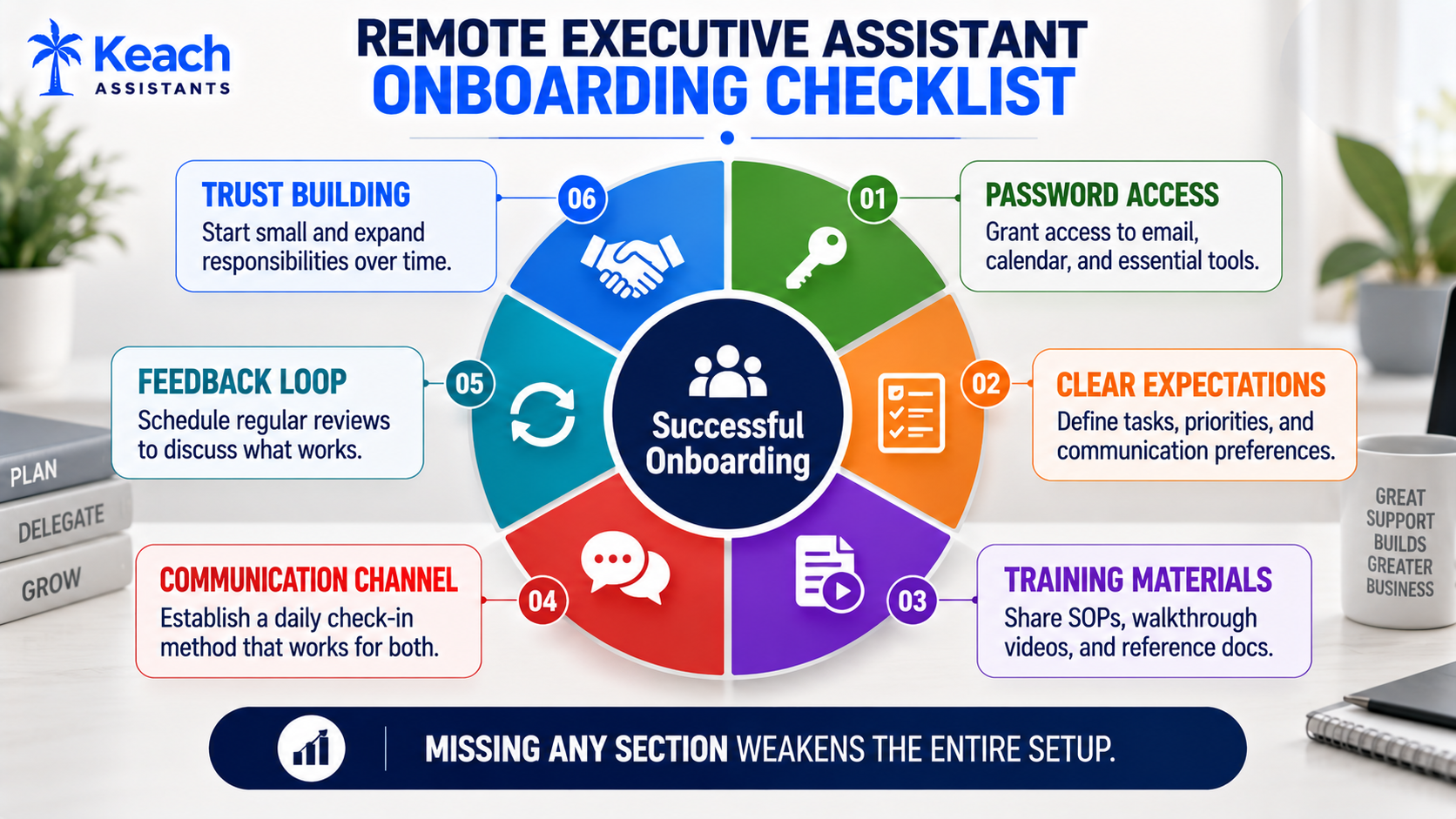
Delegating tasks without granting password access or tools creates frustration on both sides. The assistant feels set up to fail. The executive feels the assistant is not performing. The solution is simple. Provide access during onboarding. Use a password manager. Grant permissions for the tools the assistant actually needs.
Here is a visual breakdown of a proper onboarding setup:
Micromanaging Remote Executive Assistant Productivity Metrics
Remote work creates trust concerns. Some executives respond by tracking every minute. They demand hourly reports. They monitor screens. They question every pause.
Micromanagement of productivity metrics for remote executive assistants is counterproductive. This shows that you do not trust the assistant to do their job. It increases stress and diminishes motivation. Your assistant spends time writing about how they spend their time rather than spending it.
Set goals and concentrate on achieving them. Identify what success means for you. Measure the result achieved rather than the process of getting there.
Lack Of Daily Asynchronous Communication Channel For Remote EA
Communication breaks down when there is no clear system. Some executives expect instant responses at all hours. Others disappear for days and expect the assistant to read minds.
Lack of a daily asynchronous communication channel for a remote EA creates confusion. The assistant does not know what to prioritize. The executive does not know what got done. Both sides feel disconnected.
Set up a simple system. A daily update via email or Slack works well. The assistant shares what they completed and what they need. The executive responds with priorities. This keeps everyone aligned without constant meetings.
Understanding The Real Cost Of A Bad Hire
A bad hire costs more than money. It costs time, energy, and momentum. The executive spends weeks fixing mistakes. The assistant feels frustrated. The relationship ends badly.
This resource breaks down remote executive assistant costs in 2026 so you understand the investment. Making the right hire matters. Avoiding these mistakes increases your odds of success.
Knowing What Kind Of Support You Need
Some businesses hire an executive assistant when they really need an admin assistant. Or the reverse. Understanding the difference prevents mismatched expectations.
This guide explains the executive assistant role and the administrative assistant role and which role fits your needs. Clarity here saves everyone from frustration.
Planning For Transitions
If you already have an assistant who is leaving, plan carefully. A rushed transition creates chaos. A documented handover protects institutional knowledge.
Here is how to find your replacement as an executive assistant without losing momentum. Smart succession planning makes all the difference.
Common Red Flags During The Hiring Process
Watch for candidates who resist reference checks. Pay attention to communication skills. A remote assistant who cannot communicate clearly in writing will struggle in the role.
Also watch for candidates who promise skills they clearly do not have. If they claim to be an expert in everything, they are probably an expert in nothing. Look for honesty about strengths and limitations.
Building A Strong Foundation
The best executive assistants thrive when given clear expectations and proper support. They want to do good work. They want to contribute to your success. Your job is to remove obstacles and provide the tools they need. This means investing time upfront. Onboarding matters. Training matters. Communication matters. The effort you put in during the first month pays off for years afterward.
Conclusion
The best way to get help with all your duties is to hire an executive assistant to work from a distance. However, this will work properly only if you avoid making some typical errors during cooperation. Give him access, explain your expectations, and do not forget to communicate. Keach Virtual Assistant assists companies in finding the right assistants.
Ready to Hire Without the Headaches?
You do not have to learn these lessons the hard way.
Build a hiring process that sets your assistant up for success.
FAQs
What is the biggest hiring mistake when employing a virtual executive assistant?
The biggest mistake is being too demanding from the get-go because a new executive assistant will need time to learn your system and your way of doing things.
Why should I take the trouble of checking my potential candidate’s references?
Checking references proves a candidate’s work history and performance. The difference in time zones and language barriers makes reference-checking more complicated.
What is the way of giving my assistant access without reducing security?
Use a password manager in order to provide credentials in a secure way. Permissions should be provided for the tools that my assistant really needs. In case of terminating the relationship, access should be revoked immediately.
When should I stop micromanaging my assistant?
I should stop micromanaging as soon as I have expectations and effective communication. I should concentrate on results rather than on actions of the assistant.
Which communication system suits my remote assistant best?
It is best to use a daily asynchronous update. The assistant reports about done tasks and their questions, while I prioritize the work.