Exiting a position is never an easy task. Exiting a position as an executive assistant is even more difficult. You have built the systems, managed the calendar, and even taken on the position of being the gatekeeper to an executive’s professional life. Yet sometimes you need to move on. Maternity leave, career development, moving locations. It may all seem like a good reason. Transition need not be stressful.
Finding the right replacement is not just finding someone to sit in a chair. Finding the right replacement is about looking after the executive you work for and ensuring the transition is smooth. With the right steps in place, you can move on without stress.
Why Succession Planning Matters
Most people think succession planning is for CEOs. That is a mistake. Executive assistants hold critical operational knowledge. They know passwords, preferences, and unspoken rules. Losing that knowledge without a plan creates chaos.
A thoughtful transition protects everyone. The executive keeps working without disruption. The new assistant steps into a structured role. You leave without guilt or unfinished business. Everyone wins.
Creating An Executive Assistant Succession Plan Template
A succession plan is not a luxury. It is a necessity. An executive assistant succession plan template helps you document what matters before you leave.
Start by listing your core responsibilities. Calendar management, travel booking, email filtering, meeting coordination. Be specific. What do you do daily, weekly, and monthly?
Next, document your executive’s preferences. How do they like their coffee? Which meetings take priority? What communication style do they prefer? These small details make a huge difference.
Finally, map out key relationships. Who does the executive meet with regularly? Who are the important contacts? What vendors and service providers matter? This information is gold for the incoming assistant.
Feeling Overwhelmed by the Transition?
Leaving a role you care about is hard. Doing it without a plan is harder.
Find An Executive Assistant Replacement For Maternity Leave
Maternity leave comes with a deadline. You know exactly when you are leaving. That gives you time to prepare. But many assistants wait too long to start planning.
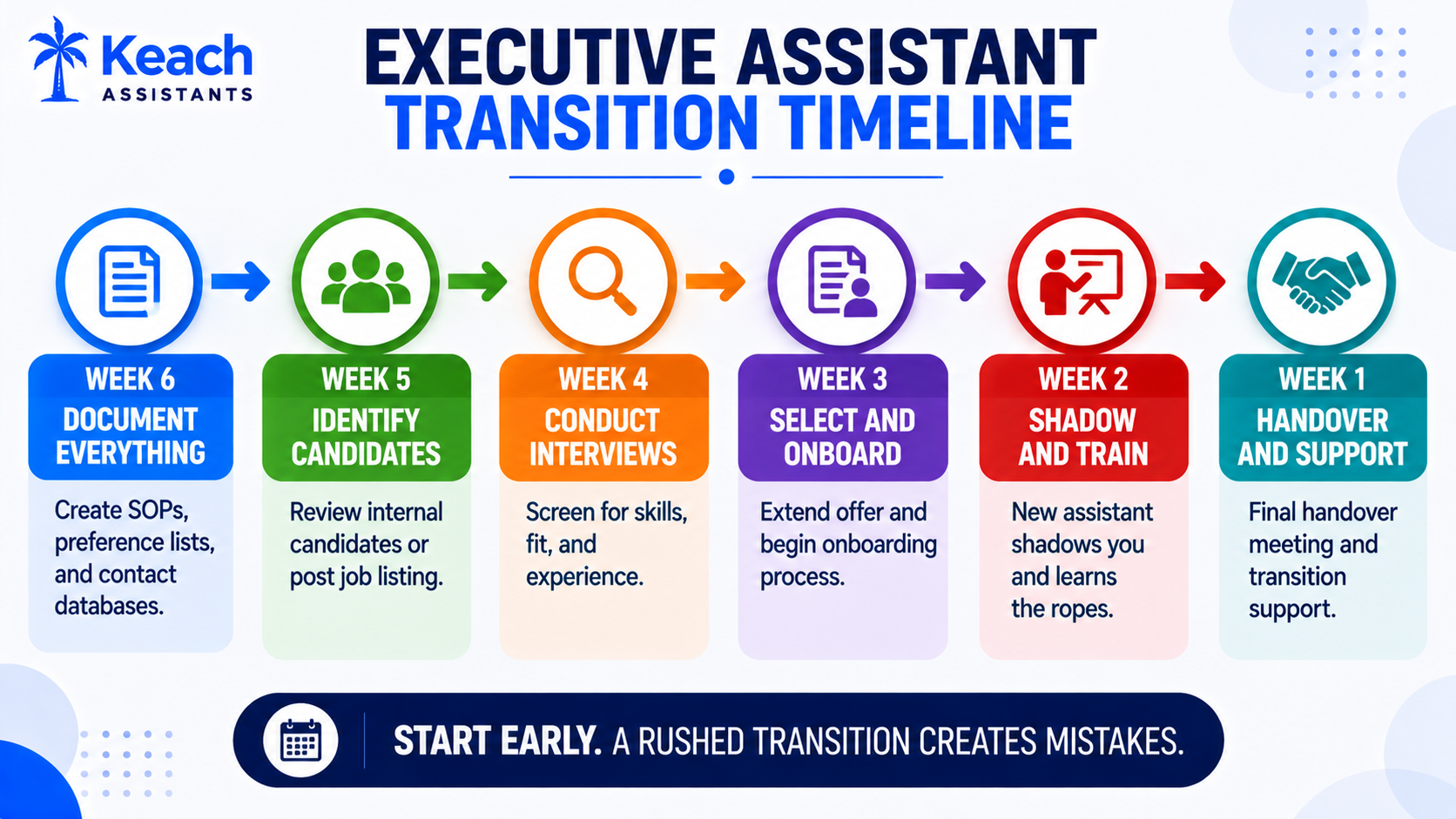
To find an executive assistant replacement for maternity leave, start early. Begin documenting processes at least six weeks before your departure. Identify potential candidates internally if possible. Someone already familiar with the company culture will ramp up faster.
If hiring externally, give yourself time for interviews and training. A rushed hire leads to mistakes. A planned transition leads to confidence.
How To Interview, Handover Checklist, and SOPs
The interview process matters. You are not just looking for skills. You are looking for fit. How to interview, handover checklist, and SOPs all work together to ensure the right person gets the right information.
During interviews, ask about specific scenarios. How do they handle conflicting priorities? How do they manage difficult personalities? What tools do they use for organization? The answers reveal whether they can handle the role.
Once hired, create a handover checklist. This document outlines everything the new assistant needs to know. Passwords, systems, contacts, and preferences. Do not rely on verbal instructions. Write it down.
SOPs are the final piece. Standard operating procedures document how tasks should be done. Step-by-step instructions for booking travel, managing expenses, and scheduling meetings. This removes guesswork and reduces training time.
Here is a visual breakdown of the transition timeline:
Executive Assistant Staffing Agency vs Job Boards
Where you find a replacement matters. Executive assistant staffing agency vs job boards is a common debate. Both have pros and cons. Staffing agencies offer pre-vetted candidates. They understand the executive assistant role. They match skills to specific needs. This saves time but costs more.
Job boards reach a wider audience. You might find hidden gems. But screening takes longer. You sort through unqualified applicants. The process requires more effort. Choose based on your timeline and budget. If you need someone fast, an agency helps. If you have time to search, job boards work.
The Emotional Side Of Leaving
Leaving a role you have invested in is emotional. You might feel guilty about moving on. You might worry about the executive you support. These feelings are normal.
The best cure is a solid handover. When you know the next person is prepared, you leave with peace of mind. You did your part. You set them up for success. Now it is time for your next chapter.
Common Mistakes To Avoid
Many assistants make the same mistakes during transitions. They wait too long to start planning. They assume verbal instructions are enough. They skip the SOP documentation. They leave without a proper handover.
These mistakes create chaos for everyone involved. The executive feels abandoned. The new assistant feels lost. You feel guilty. Avoid these outcomes by starting early and documenting everything.
Another mistake is being too attached to your way of doing things. The new assistant might do things differently. That is okay. Focus on outcomes, not exact methods. Give them room to make the role their own.
Why A Strong Handover Reflects Well On You
Your reputation matters. How you leave a role says as much as how you performed in it. A smooth transition shows professionalism. It demonstrates care for the executive and the organization.
Future employers notice this. They ask references about how you handled leaving. A well-executed handover becomes a selling point in interviews. It proves you are responsible and thoughtful.
Conclusion
Looking for a replacement to take your place as an executive assistant involves more than just filling the vacant position. It involves safeguarding relationships, ensuring that the systems remain intact, and doing so with dignity. Keach Virtual Assistant realizes the gravity of the situation. We ensure that executives get qualified assistants that blend in seamlessly. No matter whether you have a maternity leave or a new assignment coming up, a proper transition will make all the difference.
Ready to Leave With Confidence?
Your next chapter is waiting. Leave your current role with grace.
Build a transition plan that protects everyone you care about.
FAQs
Why is success planning necessary for executive assistants?
Executive assistants possess vital operational knowledge. If there is no success plan in place, that knowledge goes out with them. The success plan contains all procedures, preferences, and contacts to ensure a smooth transition.
What needs to be covered in the executive assistant handover checklist?
Your handover checklist must contain your passwords, system access, your contact list, and your daily tasks. You should include the preferences of the executive regarding communication and task priorities.
When should I begin my planning for my maternity leave?
Plan ahead of time for at least six weeks prior to your leave. This allows you to document the processes, find a substitute, and train her in your duties.
How does a staffing agency differ from job boards in looking for a replacement?
The difference is that staffing agencies offer you ready candidates who have already been checked. However, job boards allow you to attract more people, but you will need to conduct additional screening.
How can I make sure that my replacement will be successful?
It is necessary to prepare detailed SOPs for each major activity. Also, spend some time watching and training the assistant. Make yourself available for any questions for the first several weeks.