Your online store keeps growing. That is great news. But more orders mean more work. More customers mean more questions. More products mean more inventory to track.
Eventually, you hit a wall. There are only so many hours in a day. You cannot keep scaling your business if you keep doing everything yourself. The solution lies in ecommerce automation and smart delegation.
Let me walk you through which tasks you can automate, which ones you can delegate, and how to build systems that let your store run smoothly without your constant attention.
Why Ecommerce Automation Matters for Growing Stores
Manual processes limit your growth. Every minute you spend on repetitive tasks is a minute you cannot spend on strategy or product development. Automation changes this equation.
Ecommerce automation uses software to handle routine tasks automatically. Instead of manually updating inventory after each sale, automation does it instantly. Instead of sending individual order confirmations, automation sends them automatically.
The result is simple. You work less. Your store runs better. Customers receive faster service. And you have room to grow.
Order Processing Automation Saves Hours Daily
Order processing consumes significant time. You check orders, verify addresses, print labels, update tracking, and confirm shipments. Each step takes minutes. Multiply that by dozens of daily orders, and you lose hours.
Automated order processing changes everything. Your ecommerce platform syncs with shipping software. When a customer orders, the system automatically creates a shipping label. Tracking numbers upload to your store automatically. Customers receive confirmation emails without your involvement.
Consider inventory updates too. When you sell a product, your inventory count adjusts immediately. No manual counting. No spreadsheets. No forgotten updates.
Spending Hours on Repetitive Store Tasks?
At Keach Virtual Assistant, we provide ecommerce operations assistants who handle daily workflow automation. They set up automated order processing, manage inventory syncing, and handle customer service escalations. You focus on growth.
Get Automation Help
Customer Service Automation Prevents Burnout
Customer questions follow predictable patterns. Shipping timelines, return policies, product dimensions, and order status top the list. Each question requires the same answer repeatedly.
Automated chatbots handle routine inquiries instantly. They answer shipping questions. They provide order status updates. They guide customers to return information. Your team only handles complex issues.
Email automation also helps. Welcome sequences introduce new customers to your brand. Order confirmations provide shipping updates automatically. Post-purchase emails request reviews and offer cross-sells.
Inventory and Fulfillment Automation
Ecommerce operations management improves dramatically with automation. Your inventory syncs across all sales channels automatically. Sell a product on your website, and it removes it from Amazon too.
Low stock alerts prevent costly stockouts. Set a minimum threshold. When inventory drops below that level, you receive a notification automatically. No manual checking required.
Some platforms also offer automated purchase orders. When inventory reaches reorder levels, the system automatically generates a purchase order for your supplier.
Stop Manually Processing Every Order
Learn ecommerce workflow automation that scales with your business.
Tasks Worth Delegating to Humans
Not everything should be automated. Some tasks require human judgment and personal touch. These are perfect for delegation.
Customer service escalations need human handling. When a customer is angry or confused, they need empathy, not a script. Delegate these conversations to a trained team member.
Product listing creation involves nuance. Your brand voice matters. Descriptions need personality. Delegate this work to someone who understands your brand.
Content creation requires creativity. Blog posts, social media captions, and email newsletters need human thought. Outsource these to skilled writers and designers.
Build a Hybrid Approach
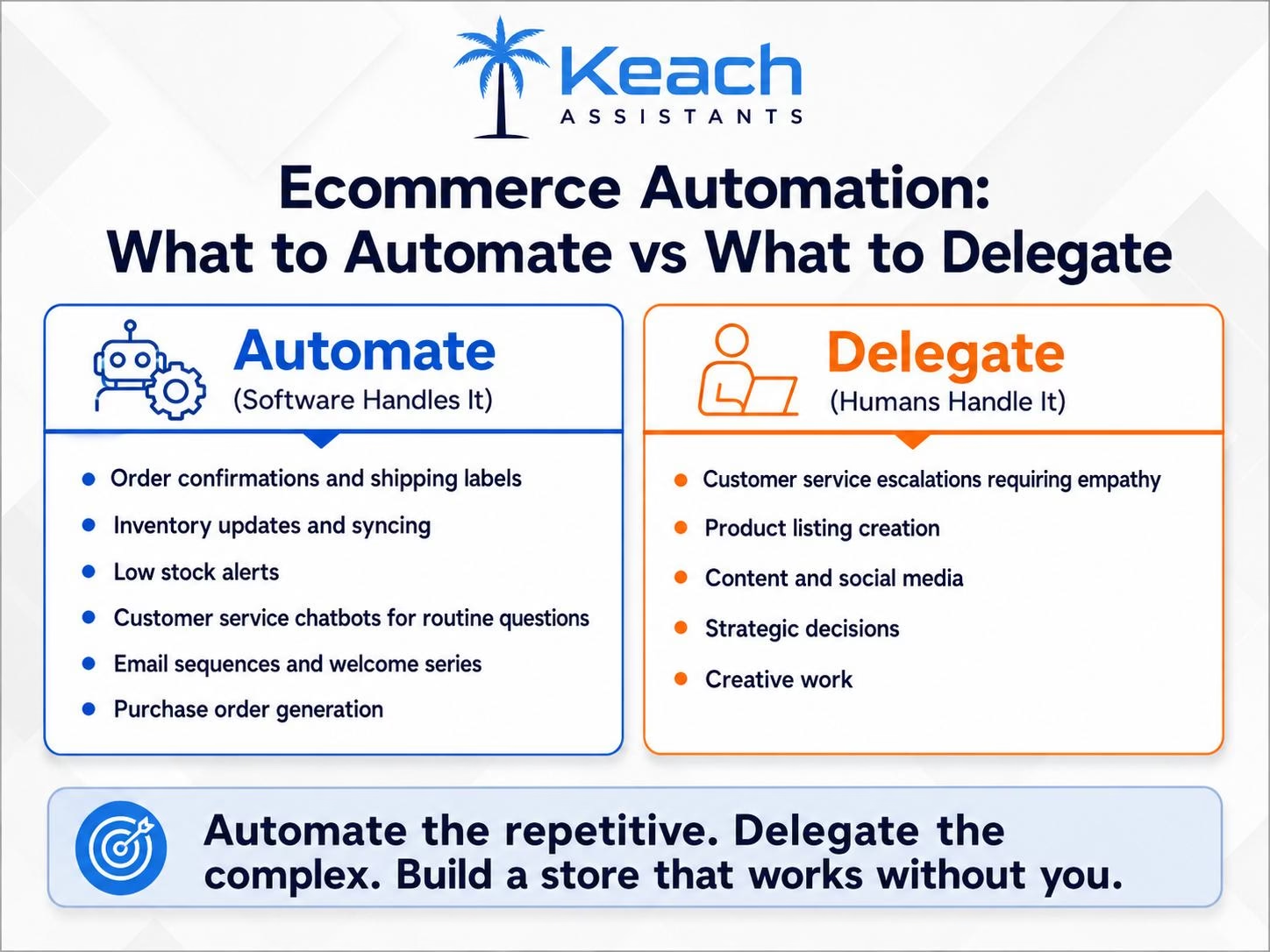
The most efficient stores use both automation and delegation. Automation handles the repetitive, rule-based work. Humans handle the complex, creative, and relationship-driven tasks.
Start by mapping your daily workflow. Identify every task you perform. Which ones follow clear rules? Automate those. Which ones require judgment? Delegate those to your ecommerce operations assistant.
Review your systems quarterly. As your store grows, new automation opportunities appear. New delegation needs emerge. Stay proactive about refining your workflow.
Before You Go: Start Your Ecommerce Journey Right
If you are new to ecommerce, check out our related guide. It covers how to start an ecommerce business without losing control of daily operations.
Ready to Automate and Delegate Your Store?
Let an ecommerce operations assistant handle daily workflows while you grow.
Conclusion
Ecommerce automation transforms how online stores operate. Automated order processing saves hours daily. Customer service automation handles routine inquiries instantly. Inventory and fulfillment automation prevent stockouts and errors.
Not every task should be automated. Creative work, complex customer issues, and strategic decisions need human judgment. These tasks are perfect for delegation to a skilled ecommerce operations assistant.
The most successful stores use both automation and delegation. Automation handles the repetitive, rule-based work. Humans handle the complex, creative, and relationship-driven tasks. Build this hybrid approach, and your store will run smoothly without your constant attention.
At Keach Virtual Assistant, we provide ecommerce operations assistants who handle daily workflows. They manage automation systems, process orders, handle customer escalations, and keep your store running. Let us help you build a store that works without you.
Frequently Asked Questions
What is ecommerce automation and how does it work?
Ecommerce automation uses software to handle routine tasks automatically. Instead of manually updating inventory, automation does it instantly. Instead of sending individual order confirmations, automation sends them automatically. Ecommerce workflow automation saves hours daily and reduces errors.
What tasks can I automate in my online store?
You can automate order confirmations, shipping label creation, tracking number updates, inventory syncing, low stock alerts, customer service chatbots, email sequences, and purchase order generation. Most ecommerce platforms offer built-in automation features or integrate with third party tools.
How does automated order processing work?
Your ecommerce platform syncs with shipping software. When a customer orders, the system automatically creates a shipping label. Tracking numbers upload to your store automatically. Customers receive confirmation emails without your involvement. Inventory updates instantly after each sale.
What should I delegate rather than automate?
Delegation works best for customer service escalations that require empathy, product listing creation that needs brand voice, and content creation that demands creativity. These tasks require human judgment and personal touch. Delegate them to a skilled ecommerce operations assistant.
How can an ecommerce operations assistant help my store?
An ecommerce operations assistant sets up automation systems and monitors their performance. They process orders that require manual handling. They manage customer service escalations. They handle product listing creation. They keep your store running while you focus on growth.