Inventory is a balancing act. Order too little and you run out of stock. Order too much and your money sits in a warehouse collecting dust. Both scenarios hurt your bottom line. Amazon sellers learn this lesson fast. The algorithm punishes stockouts with lost rankings. It punishes overstock with storage fees.
That is where a skilled Amazon VA comes in. They monitor your inventory levels. They track sales velocity. They plan ahead so you never wake up to the dreaded “out of stock” notification. This is not guesswork. It is a system built on data and discipline.
The Cost Of Poor Inventory Management
Running out of stock is not just a missed sale. It is a ranking hit. When your listing goes dark, competitors step in. By the time you restock, you have lost momentum. Climbing back up takes weeks. Overstocking is equally painful. Amazon charges storage fees. Long-term storage fees kick in after 365 days. Excess stock ties up cash that could fund new products or marketing. An Amazon VA helps you avoid both. They keep inventory levels aligned with demand. They flag issues before they become emergencies.
What An Amazon VA Actually Does For Inventory
A virtual assistant focused on inventory management handles several critical tasks.
Sales Velocity Tracking
The VA monitors how fast each SKU sells. They look at daily, weekly, and monthly trends.
Restock Alerts
They set thresholds for each product. When inventory drops below a certain level, they alert you immediately.
Supplier Coordination
They communicate with suppliers about lead times. They confirm order statuses and track shipments.
FBA Fee Monitoring
They watch for storage fee increases. If inventory is moving slowly, they recommend promotions or removals.
Tired of Guessing When to Reorder?
Stop crossing your fingers every time you check inventory.
FBA Inventory Planning For Small Sellers
Small sellers operate on tight margins. FBA inventory planning for small sellers requires a different approach than big brands use. You cannot afford to tie up thousands in slow-moving stock. You also cannot afford frequent stockouts.
An Amazon VA understands this tension. They help you prioritize your best sellers. They recommend smaller, more frequent orders to reduce risk. They also identify products that drain cash without delivering returns. The VA also tracks seasonal trends. If your product sells better in summer, they plan accordingly. They build a restock calendar that anticipates demand spikes.
How To Avoid Stockouts On Amazon
The best way to handle a stockout is to prevent it. How to avoid stockouts on Amazon starts with accurate forecasting. You need to know average daily sales, lead time from suppliers, and Amazon’s inbound processing time.
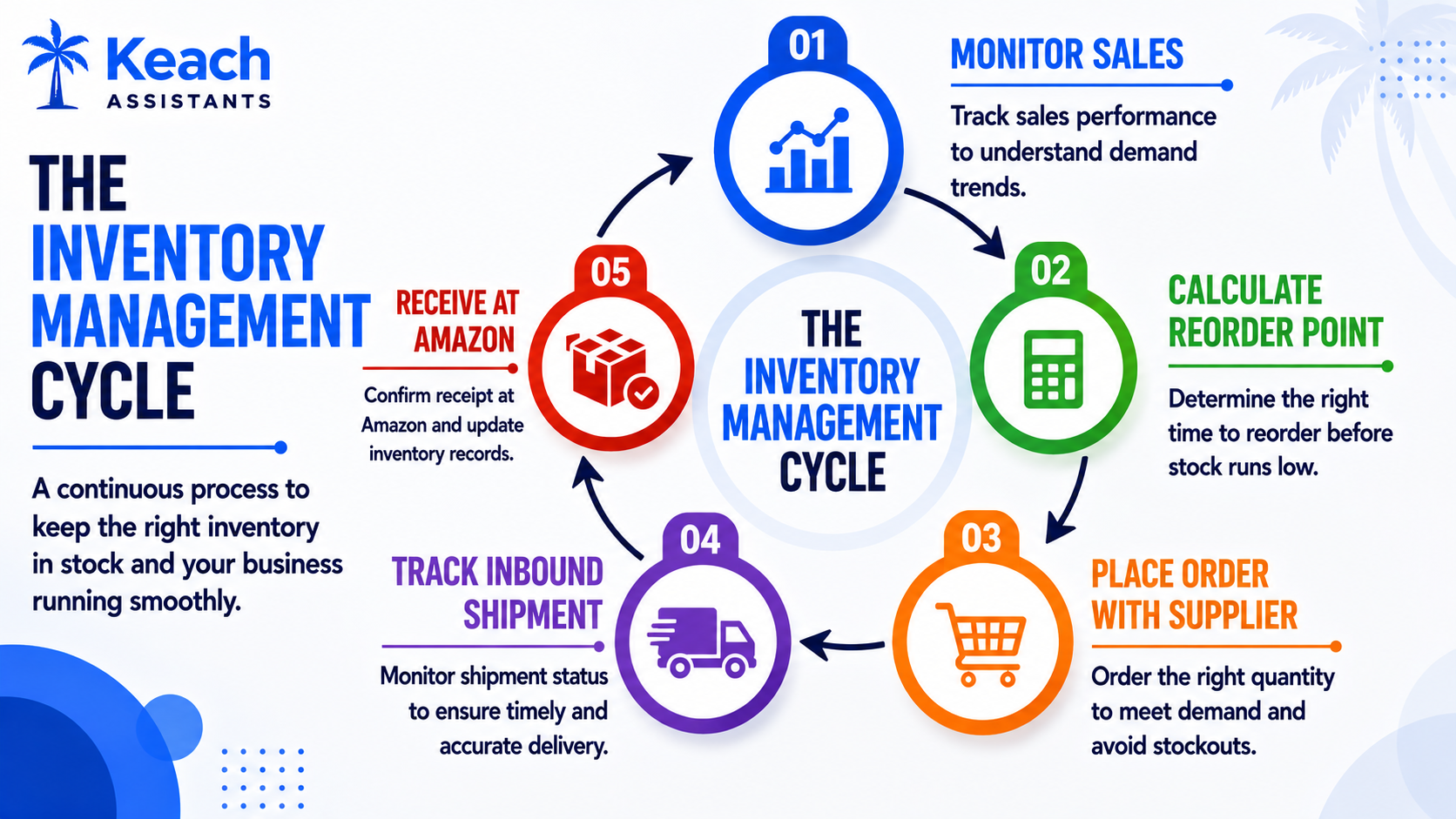
An Amazon VA calculates your reorder point. This is the inventory level that triggers a new order. When stock hits that number, the VA places a reorder. It is a simple system that works. They also monitor inbound shipments. If Amazon delays receiving, the VA follows up. This visibility prevents surprises.
Amazon FBA Inventory Management Tips
Amazon FBA inventory management tips include maintaining a buffer stock of safety inventory. This protects against unexpected demand spikes or supplier delays.
Another tip is to review your inventory weekly. Do not wait for Amazon’s reports. An Amazon VA handles this weekly review for you. They send a summary so you always know where things stand. The VA also watches for stranded inventory. This happens when listings are suppressed due to errors. Stranded inventory does not sell. It just sits there costing you money.
Here is a visual breakdown of the inventory management cycle:
Amazon VA For Inventory Restocking
An Amazon VA for inventory restocking handles the entire process from start to finish. They know your lead times. They understand Amazon’s capacity limits. They also manage variations. If you sell a product in three sizes, each variation needs separate attention. The VA tracks individual SKUs to ensure none of them run dry. The VA also monitors Amazon’s restock limits. If you exceed the limit, your shipment gets rejected. A VA keeps you within bounds while maintaining adequate stock.
The Bigger Picture: Account Health
Inventory management connects to every part of your Amazon business. Good inventory practices protect your account health. They keep your IPI score high. Your IPI score determines your storage limits. An Amazon VA helps you maintain a healthy IPI by managing excess inventory and fixing listing issues.
If your account faces a suspension, inventory stops moving. Here is a look at how a VA can help with Amazon account suspension and get things moving again.
Protecting Your Brand While Managing Stock
Brand Registry offers tools that help with inventory protection. This resource explains whether you really need Amazon Brand Registry and who sets it up for you.
Keyword Research and Inventory Demand
Demand forecasting ties directly to keyword research. This breakdown shows how Amazon VAs do keyword research and why it is not the same as Google.
Conclusion
Inventory management is not glamorous. But it is essential. Getting it right means steady sales and healthy cash flow. Getting it wrong means lost rankings and wasted money. An Amazon VA for inventory restocking brings structure to the chaos. Keach Assistant provides the expertise you need.
Ready to Take Inventory Seriously?
You have built a business worth protecting.
Let keach VA keep your stock balanced and your sales steady.
FAQs
What is Amazon VA?
It is a virtual assistant that focuses on assisting sellers on Amazon in their work. These assistants are responsible for managing the inventory, listing optimization, conducting keyword research, as well as dealing with customers. Some of them may also handle brand registration and account health.
Why do I run out of my Amazon inventory?
You run out of your inventory because your reorder point is too low or because it takes more time to receive the inventory from your supplier than initially anticipated. You can possibly underestimate sales velocity.
How do I calculate my reorder point on Amazon?
Multiply your average daily sales by your total lead time in days. Then add a safety buffer. For example, if you sell ten units daily and your lead time is fourteen days, your reorder point is around 140 units plus buffer.
When should I send more inventory to Amazon?
You should send inventory when your stock level hits your reorder point. This accounts for the time it takes to ship and process at Amazon. Sending too late causes stockouts. Sending too early increases storage fees.
What happens if my Amazon account gets suspended while I have inventory?
Your inventory remains in Amazon’s fulfillment centers, but you cannot sell it. This ties up cash and risks storage fees. You should resolve the suspension quickly. A VA can help with the appeal process.