A seller once copied keyword research strategies from Google SEO and applied them to Amazon listings. The result was a listing stuffed with phrases that nobody on Amazon was actually searching for. The product was good, and the photos were solid, but the listing stayed buried in the search results. The seller had optimized for the wrong search engine.
Amazon is not Google, and the way people search on Amazon is completely different. Shoppers on Amazon are not looking for information. They are looking to buy. The keywords they type reflect purchase intent, and the Amazon VA who understands this difference finds the terms that actually drive sales. The keyword research process starts with understanding how Amazon’s search engine actually works.
How the Amazon A9 Algorithm Works and What It Cares About
How the Amazon A9 algorithm works has a simple answer. Amazon wants to show shoppers the products they are most likely to buy. The algorithm ranks listings based on relevance and performance. Relevance comes from the keywords in the title, the bullet points, and the backend search terms. Performance comes from the conversion rate and the sales velocity.
An Amazon VA who knows the algorithm focuses on the keywords that match buyer intent. The research starts with the search terms real shoppers use, and the listing gets optimized around those terms. The Amazon keyword research for beginners approach is about understanding what Amazon shoppers type when they are ready to spend money.
For a deeper look at how Brand Registry fits into the optimization picture, this guide on setting up Brand Registry covers the tools that protect the listing.
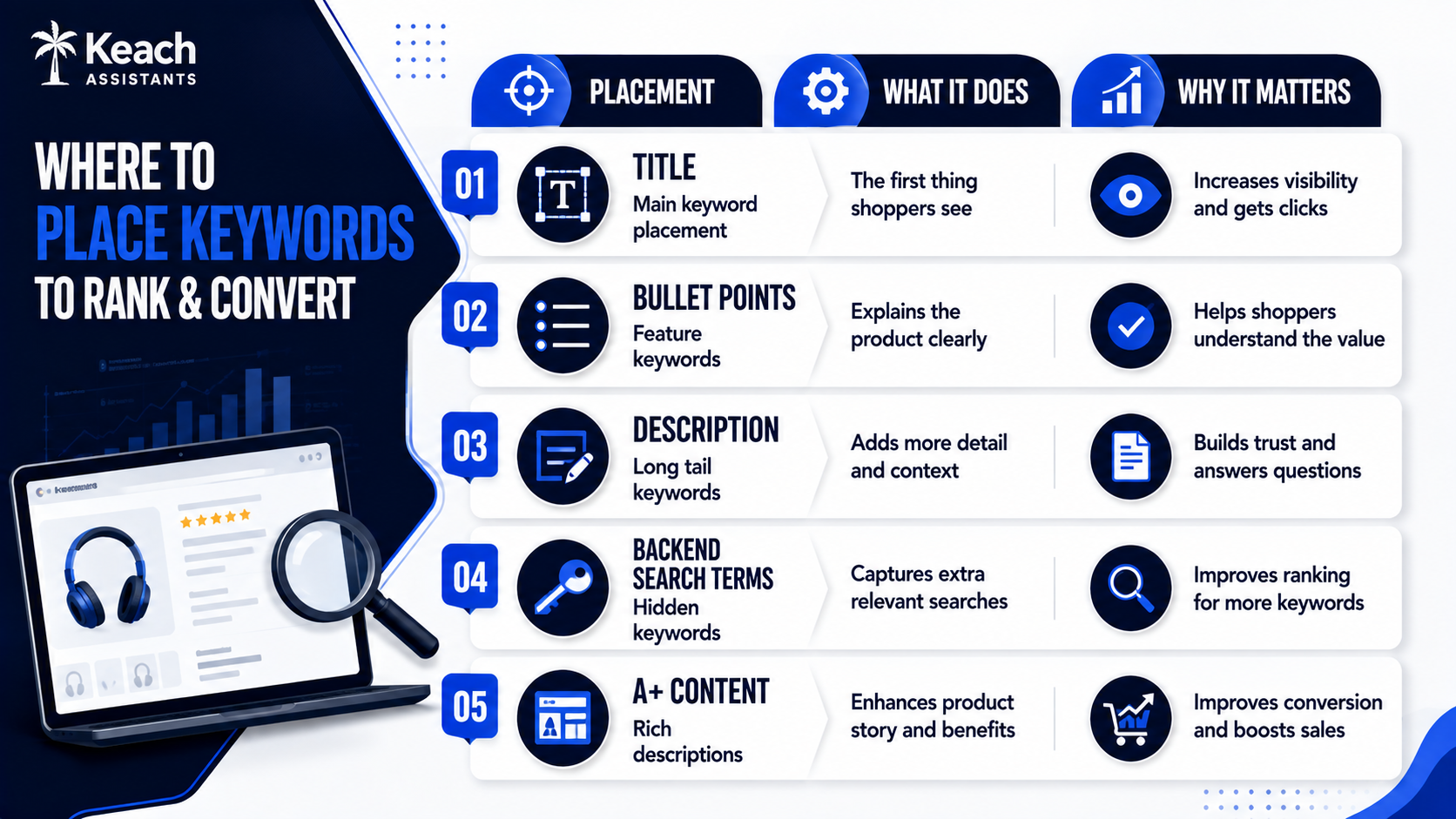
Where Amazon Keywords Go
Amazon Listing Keyword Research Tips and What Most Sellers Miss
The best Amazon listing keyword research tips come from understanding that Amazon shoppers search differently. They use shorter phrases, and they often include product attributes like size, color, and material. The search terms are practical and purchase-focused rather than informational.
An Amazon VA who does this work well uses the Amazon search bar as the first research tool. The autocomplete suggestions reveal what shoppers are actually typing. The competitor analysis and the review mining fill in the gaps. The Amazon VA for seo optimization approach builds a keyword list that matches how real shoppers think about the product.
Get an Amazon VA Who Knows Amazon SEO.
Keach Assistants handle keyword research that drives sales.
Find a good VA and get your listings seen by potential buyers.
Why Amazon Keyword Research Is Different From Google SEO
The difference between Amazon and Google keyword research comes down to intent. Google users are looking for answers and information. Amazon users are looking to buy. The keywords reflect that difference, and the optimization strategy has to adapt accordingly.
An Amazon VA who understands this does not just copy Google strategies. They build a keyword list around the terms that Amazon shoppers actually use when they are ready to make a purchase. The listing gets optimized for those terms, and the sales follow. The approach is different because the platform is different and the shopper’s mindset is different.
A Listing That Shows Up When Shoppers Search
The goal of Amazon keyword research is not just to get traffic. It is to get the right traffic. The shoppers who find the listing through the right keywords are the ones who are most likely to buy. The right Amazon VA makes that connection happen.
We help Amazon sellers optimize their listings with the keywords that matter. The research gets done, and the listing gets found, and the sales start climbing. The product shows up when shoppers are ready to spend money.
Find an Amazon VA Who Knows Keywords.
Let Keach match you with a virtual assistant who understands Amazon SEO.
FAQs
How does Amazon keyword research compare to Google keyword research?
On Amazon, customers want to make purchases, while on Google, customers seek out information. The intent of the keywords varies.
What does the Amazon A9 algorithm care about?
It cares about keyword relevance and performance. This means that if you have a listing that is relevant to what people search for and performs well in conversion, it will rank higher.
Where should you place your Amazon keywords?
In the title, in the bullet points, in the description, and in the backend keywords.
Can a VA handle Amazon keyword research?
Yes. An experienced Amazon VA uses the search bar, competitor analysis, and review mining to build a keyword list. The listing gets optimized, and the visibility improves.
What is backend search term optimization?
It is the hidden keyword section in the Amazon listing backend. The terms placed there help the listing appear in more searches without cluttering the visible content. The backend terms capture searches that do not fit naturally elsewhere.