An agent once hired a virtual assistant and expected magic from day one. The VA was smart, motivated, and eager to help. But the agent had no onboarding process, no training materials, and no clear list of what needed to be done. The first two weeks were a mess of confused messages and half-finished tasks, and the agent started wondering if the hire was a mistake.
The problem was not the VA. It was the lack of structure. A virtual assistant for real estate can become a game-changing hire when the onboarding is done right. Without it, even the best VA flounders. The difference between a productive relationship and a frustrating one comes down to what happens in those first few weeks.
How To Onboard A Real Estate Virtual Assistant And What The First Week Should Look Like
The steps involved in how to onboard a real estate virtual assistant begin with clarity. The agent has to be clear on what the VA will do, what the priorities are, and how communication is done. The real estate VA onboarding process is not about dumping tasks on people and expecting them to figure things out. This is about creating a solid foundation which enables independence.
The virtual assistant for real estate who is properly oriented knows the business, the technology, and the voice. The VA gets to learn how the CRM system operates, how the agent communicates, and how the workflow operates. Week one is all about learning and asking questions. Week two is all about doing with supervision, while week three is about independence.
Want to understand the cost side first? This breakdown of real estate VA costs explains what to expect at different levels.
The Real Estate VA Onboarding Timeline
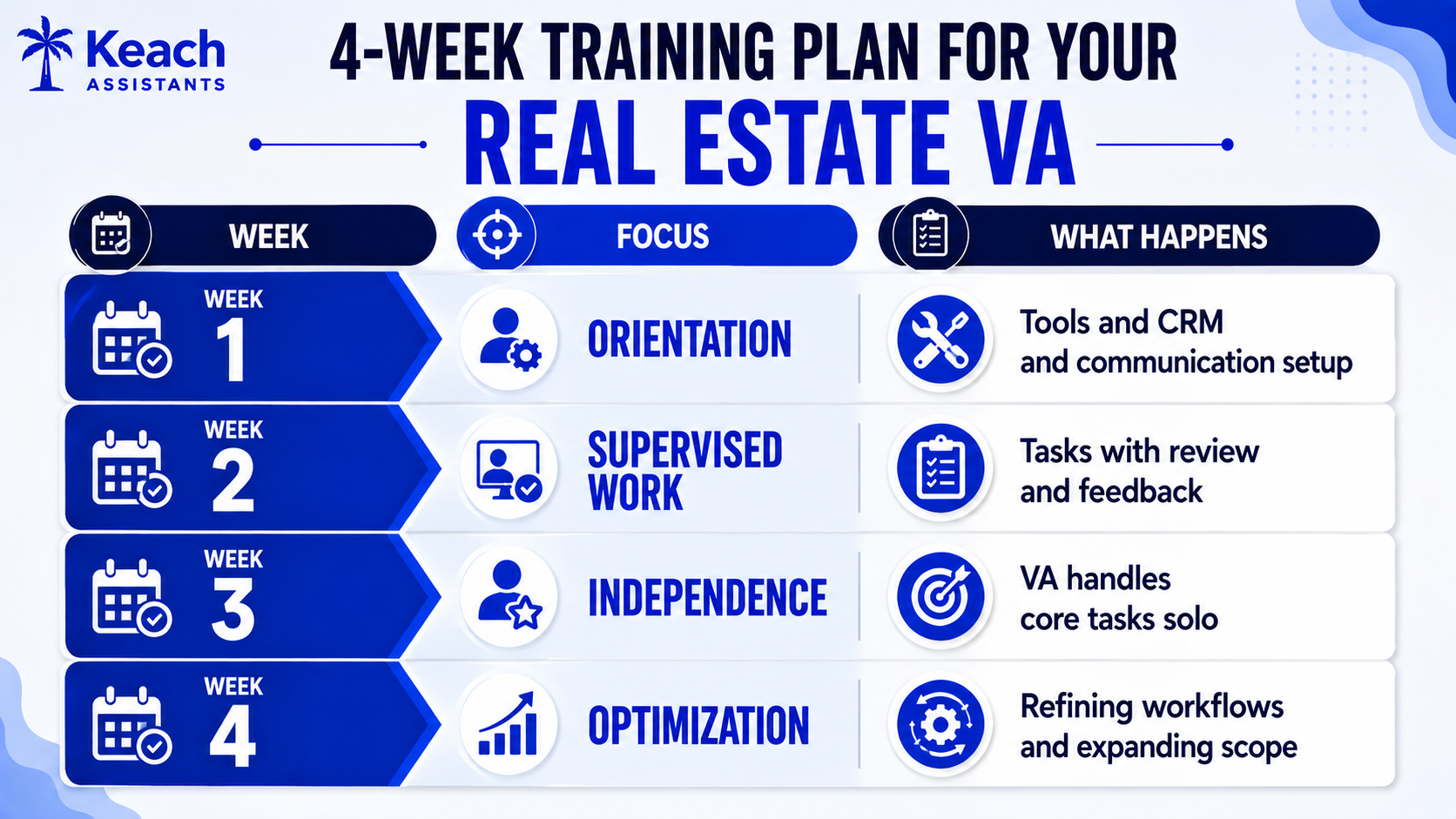
VA Training Workflow And What To Include In The First Month
A solid VA training workflow covers the tasks the VA will actually perform. Lead follow-up, appointment scheduling, listing coordination, and CRM updates. Each task gets documented with a step-by-step process that the VA can reference when questions come up.
A virtual assistant for real estate who has access to clear documentation does not need to ask the agent about every little thing. The documentation becomes the first resource, and the agent becomes the second. The training workflow turns a new hire into a productive team member in weeks instead of months.
Onboard Your Real Estate VA the Right Way.
Keach virtual assistant arrives ready to learn and ready to work.
Real Estate Virtual Assistant Training Checklist And What Most Agents Forget
A real estate virtual assistant training checklist should include more than just the task list. The VA needs access to the right tools, the right logins, and the right templates. The agent needs to explain the brand voice and the client experience and the non-negotiables that define how the business operates.
A virtual assistant for real estate who understands the why behind the tasks does better work than one who only knows the how. The training checklist that covers both produces a VA who can make judgment calls instead of just following instructions.
Curious how a well-trained VA impacts the bottom line? This piece on how VAs help agents close more deals breaks down the difference.
A VA Who Becomes Part Of The Business
The goal of onboarding is not just to get tasks off the agent’s plate. It is to build a working relationship that grows stronger over time. The VA learns the business, and the business learns to trust the VA, and the partnership becomes something the agent cannot imagine working without. The onboarding process is structured, the training is thorough, and the result is a VA who fits the way the agent works.
If rental properties are part of the operation too, this guide on how property management VAs handle tenant screening shows another side of the support.
A Hire That Works From Day One
The agents who get the most from their virtual assistants are the ones who invest in the beginning. They document the workflows, set the expectations, and give the VA room to learn. The investment pays off in a working relationship that saves hours every single week.
At Keach Assistants, We help real estate agents build that kind of partnership. The onboarding is clear, the training is thorough, and the work gets done right. The agent gets time back, and the business gets room to grow.
Find a Real Estate VA Who Is Ready to Learn Your Business.
Let Keach match you with a virtual assistant who knows real estate and fits your workflow.
FAQs
What is the process of onboarding a real estate virtual assistant?
Start with clarity. List out tasks, priorities, and expectations regarding communications. Allow access to necessary tools and templates. Plan for an organized onboarding month for the VA that includes monitoring and feedback.
What should be in a VA training checklist?
The tasks and the tools and the logins. The brand voice and the client experience standards. The step-by-step processes for each recurring task. The documentation becomes the VA’s first resource.
How long will it take to onboard the real estate VA?
On average, a planned onboarding takes anywhere between three and four weeks. The first week is orientation, the second week is supervised work, and the third week is when the VA works independently. Time required depends on the complexity of tasks involved.
What type of tasks can a real estate VA perform post-onboarding?
Follow-ups with leads, appointment scheduling, and listing coordination are some tasks that a VA can perform after being onboarded.
How do I know if my VA is ready for more responsibility?
When the VA completes core tasks without supervision and asks fewer questions each week. The documentation gets used, and the work gets done correctly. That is the signal to expand the scope.