There’s an inherent freedom to freelancing that is difficult to grasp for those who have never tried it before. You pick your clients, decide on the working hours, and keep the proceeds you earn. What no one seems to point out in those early days when everything is going great is that now you are not only your own boss, but your own accountant, tax preparer, and collections department as well, none of which seems as exciting as your actual work.
Initially, most people keep track of their earnings using a simple spreadsheet or even some free software, and it works just fine as long as the sums involved are modest and the deadlines are predictable. And then, all of a sudden, a hectic period arrives, and there’s a pile of unpaid invoices and unclear expense statements in front of you, along with looming deadlines on tax payments. This is often when the question is asked.
Why Freelancers Resist Getting Help With The Books
The resistance usually comes down to two things. Cost and control, and both are understandable. When you’re earning irregular income, adding a recurring expense feels risky, especially when you’re not sure the work is complex enough to justify it. There’s also a pride element that rarely gets mentioned. Freelancers tend to be capable people who built something from nothing, and admitting that bookkeeping is the one area they can’t handle alone feels like a small defeat.
What makes this harder is the advice floating around online, which usually splits into two extremes. One camp insists every freelancer needs professional help from day one, while the other argues that a simple spreadsheet covers everything until you’re making serious money. Neither extreme is useful because the right answer depends entirely on your situation, your income pattern, and how much time you’re currently losing to financial admin.
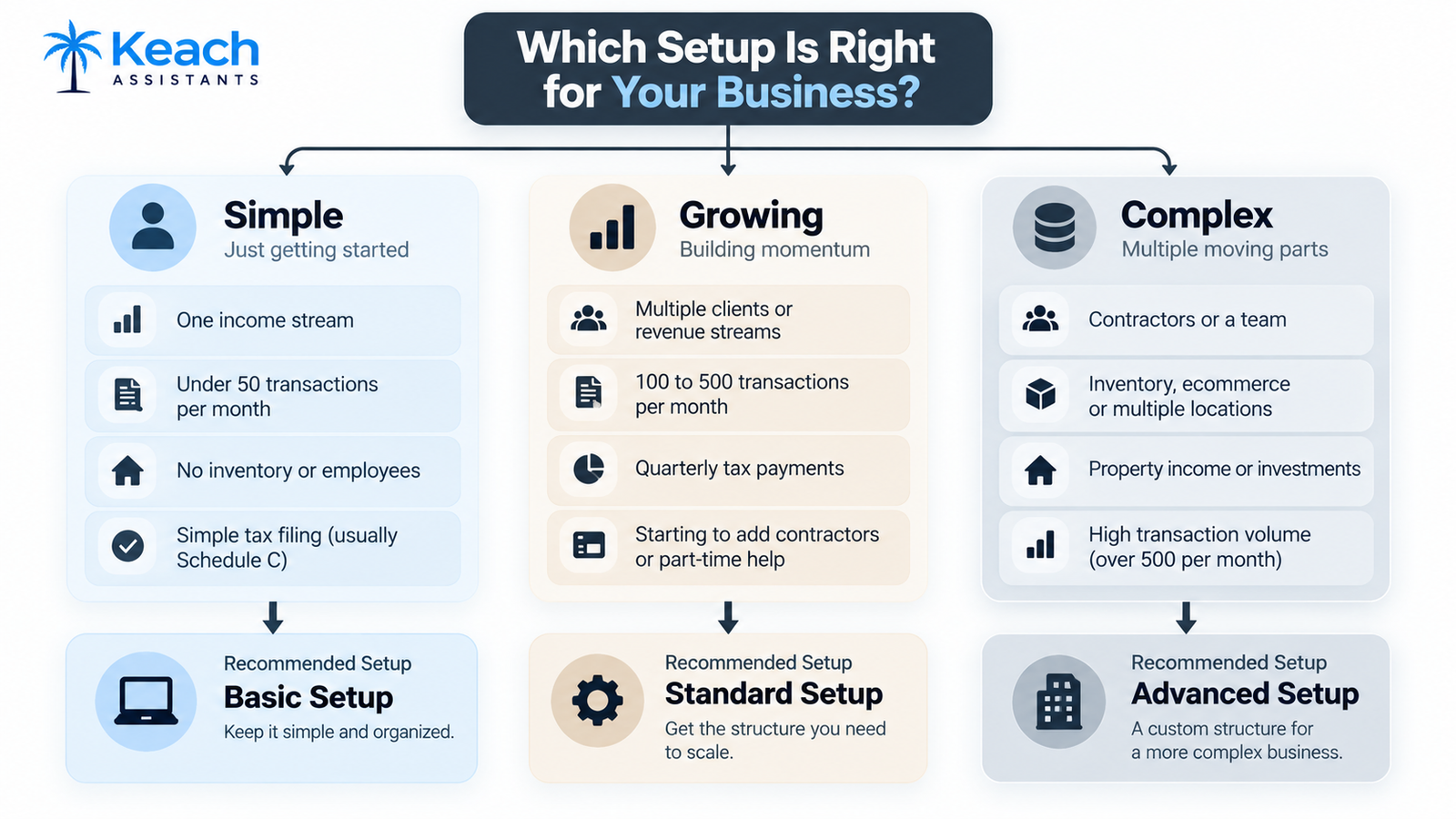
Choosing The Right Business Accounting Setup
When Should a Freelancer Hire a Bookkeeper
There’s no single income number that triggers this decision, because the complexity of your finances matters more than the size of your revenue. A freelancer earning well from one retainer client with predictable monthly invoices might handle their own books for years, while someone earning less from a dozen small clients across multiple platforms could need help much sooner.
A few signals tend to show up before the decision becomes obvious. You’re spending more than a few hours a month on bookkeeping and still feel behind. You’ve missed or nearly missed a quarterly tax payment. Your receipts live in three different places, and you’re not sure what you’ve claimed. You’re mixing business and personal expenses without a clear system. When two or more of these describe your situation, the cost of getting help is usually lower than the cost of continuing to guess.
The other consideration is opportunity cost, which freelancers tend to undervalue. Every hour spent reconciling invoices is an hour not spent on billable work, and if your hourly rate is decent, the math usually favors delegating sooner than you’d expect.
Dreading Tax Season Again?
Keach Virtual Assistant handles the books so deadlines stop sneaking up.
What A Virtual Bookkeeper Actually Does
The role goes well beyond data entry, and that’s the part most freelancers don’t realize until they’ve worked with one. A virtual bookkeeper categorizes transactions, reconciles accounts, tracks deductible expenses, prepares reports your accountant can actually use, and often flags issues before they become problems, such as a client who’s consistently late or a subscription you forgot you were still paying for.
The remote setup suits freelancers particularly well because there’s no office visit, no paperwork handoff, and no scheduling friction. Everything happens through shared software, and you get the benefit of someone who sees your numbers monthly rather than once a year when your accountant asks for a shoebox of receipts. That monthly visibility matters more than people expect, because it turns tax season from a crisis into a formality.
The Cost Question, Answered Honestly
The most common hesitation is cost, and it deserves a straight answer rather than a sales pitch. How much does a bookkeeper cost for a freelancer depends on transaction volume, complexity, and how hands-off you want to be, which means pricing varies widely and any single figure would be misleading.
What matters more is the comparison you’re actually making. Against the hourly rate you charge clients, against the penalties for late or incorrect filings, and against the hours you’d otherwise spend on admin. For most freelancers, the calculation tilts toward hiring help earlier than they initially planned, especially once quarterly taxes enter the picture.
Situations That Change the Equation
Some freelancers have financial lives that go beyond standard self-employment, and those situations tend to need professional support sooner. Rental income is a good example, and this is part of why freelance real estate property owners need virtual bookkeeping services that understand depreciation, cost basis, and how property income interacts with your regular earnings. Getting that wrong can be expensive in ways that aren’t obvious until an accountant catches it years later.
Anyone who’s searched for affordable virtual bookkeeping options for self-employed freelancers knows the market is crowded with providers offering wildly different service levels, and sorting through them takes time you probably don’t have. The shortcuts worth taking are asking about software compatibility, confirming who handles the tax filing itself, and checking whether the provider works with freelancers specifically rather than treating them as a small version of a regular business.
Conclusion: Help Earlier Than You Think
The honest answer to whether freelancers need a virtual bookkeeper is that most don’t need one immediately, but almost all of them need one earlier than they think. The tipping point isn’t a revenue milestone. It’s the moment bookkeeping starts costing you either money or peace of mind, and by then you’re usually already behind.
Keach Virtual Assistant works with freelancers who’d rather spend their hours on client work than on spreadsheets, and the goal isn’t to take over your finances but to keep them organized enough that you always know where you stand.
Ready to Stop Guessing About Your Numbers?
Keach Virtual Assistant keeps your books current and tax-ready.
FAQs
Can’t I just use accounting software without needing anyone else?
The software does the calculations, but somebody needs to classify your transactions, reconcile accounts, and find inconsistencies. If you like this kind of job and you have the time to do it, then you don’t need anything else. Otherwise, the software will become just one more pending task.
How often should I look at my accounts?
Monthly would be ideal for the majority of freelancers since it’s frequently enough to notice any issues and infrequently enough not to become a burden. Quarterly reviewing is also a viable option, though with a higher chances of unpleasant tax surprises.
What should I give my bookkeeper?
Bank and credit card statements, invoices you’ve sent out, receipts from deductible expenses, and loan or contract agreements, if applicable. Digital copies of those files will be enough. Shared folders are normally better for sharing than email attachments.
Does my bookkeeper also take care of my taxes?
Typically, no. The bookkeeper will prepare and arrange your files, and your tax specialist will file the return. Some bookkeeping companies provide tax preparation as well.