Collecting payments that were due in the first place is perhaps one of the most bizarre aspects of doing business. The job has been done, the value has been delivered, and here you are sending out follow-ups yourself that make you feel like you are asking for a favor. There are many owners who leave their invoices unpaid for several weeks only because they find it awkward to discuss it.
That’s what explains why so many companies outsource payment collection to another party. Not because they lack the ability to send out emails, but because the very person who performed the service is the last one who should collect the payment.
Why Late Payments Snowball Faster Than People Expect
A single overdue invoice is annoying. Five overdue invoices is a cash flow problem, and it usually arrives without warning because the pattern builds quietly. Clients pay late once, nothing happens, so they pay late again. Nobody sends a reminder because nobody wants to be the difficult one.
The real damage isn’t the missing money itself. It’s the decisions you delay because the money hasn’t arrived. Hiring, inventory, software renewals- all of it waits on cash that should already be sitting in your account.
There’s also a concentration risk most owners overlook. If two or three clients make up most of your revenue and they’re all slow payers, you’re essentially financing their businesses for free while your own bills stay current through sheer discipline.
The 45-Day Invoice Follow-Up Timeline
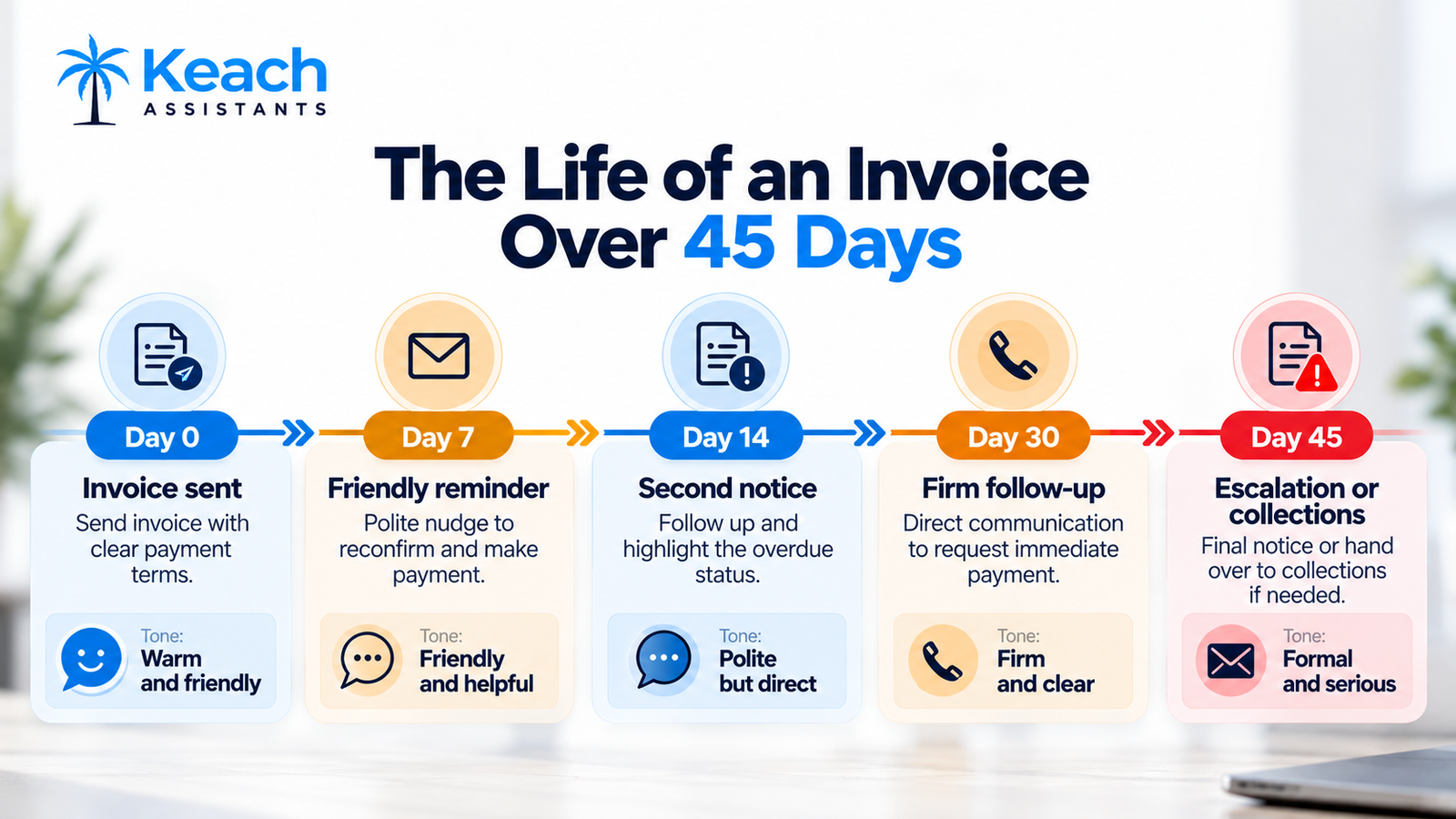
What a Virtual Assistant Can Realistically Handle
The answer is, indeed, yes, and it is one of the best-suited options for your type of business. Tasks are well-defined and repetitive; therefore, this is one of those cases when a professional assistant works better than a person doing this job in addition to everything else.
The list of duties of a bookkeeping virtual assistant includes sending invoices as required, checking which invoices have been paid, contacting clients about late payments at regular intervals, documenting all contacts, and identifying clients who usually pay late in order for you to consider changing their terms.
What they shouldn’t handle is anything that requires judgment about the relationship itself. Negotiating a payment plan with a long-standing client, deciding whether to pause work on an overdue account, or waiving a late fee. Those calls stay with you. The assistant manages the process, and you make the decisions.
Tired of Sending Awkward Payment Reminders?
Keach Virtual Assistant handles the follow-ups so you don’t have to.
Setting Up a Workflow That Actually Works
The best workflow for a bookkeeping VA handling unpaid customer bookkeeper situations rests on clear rules decided in advance, not improvised in the moment.
Here’s what that looks like in practice.
- A defined schedule for when invoices go out, so nothing depends on memory.
- Reminder intervals set ahead of time, usually around day seven, day fourteen, and day thirty.
- Template messages written in your voice, with room to adjust tone based on the client.
- A shared log so every contact gets recorded, and nothing gets duplicated.
- Clear escalation rules for when an account moves from follow-up to a decision you need to make.
- A weekly summary showing what’s outstanding and what’s been resolved.
The templates matter more than people expect. Written once, they remove the hesitation that stalls most follow-ups. The assistant isn’t composing a difficult message from scratch every time. They’re sending something you already approved, which keeps the tone consistent and the process moving.
Why the Handoff Works Better Than Doing It Yourself
There’s a psychological layer here that rarely gets mentioned. Owners delay follow-ups because the relationship feels personal, and asking for money from someone you like is uncomfortable. An assistant carries none of that baggage.
That distance is useful. A bookkeeping virtual assistant sending a polite reminder on day fourteen isn’t making a judgment about the client. They’re executing a process, and the client reads it that way too. Most late payments aren’t malicious. They’re just forgotten, and a consistent reminder resolves the majority of them without any conflict at all.
When Outsourcing Makes Sense
Somewhere along the way, most owners start wondering whether freelancers really need a virtual bookkeeper or whether the whole thing can keep running on spreadsheets and good intentions. The answer usually depends on how much time gets lost each month to chasing payments and reconciling what’s actually been received.
Understanding when it is time to hire a remote bookkeeper follows a similar logic. If you’re spending hours each month on admin that produces no revenue, and you’re still not sure where things stand, the tipping point has probably already passed.
Outsourcing invoice management and collections to a virtual bookkeeper covers the whole loop rather than just the sending part. Invoices go out on schedule, reminders go out on schedule, payments get logged, and you receive a summary instead of a pile of unread emails.
Handling the Awkward Conversations Without Losing Clients
The fear most owners have is that firm follow-ups will damage relationships. In practice, the opposite tends to happen. Clients who pay late usually know they’re late, and a polite, consistent reminder is a relief rather than an insult.
The key is tone and pacing. Early reminders stay warm and assume the best. Later ones get more direct without turning hostile. If a client reaches the escalation stage, that’s a signal worth acting on, whether that means adjusting payment terms going forward or reconsidering how much work you take from them.
Knowing how to outsource accounts receivable follow-up properly means deciding those rules upfront and letting the assistant follow them, rather than renegotiating your own boundaries every time an invoice goes past due.
Conclusion: Consistent Beats Comfortable
Most late payments don’t need confrontation. They need a system that sends the reminder on time, every time, without the hesitation that comes from being the person who did the work. Keach Virtual Assistant takes that whole layer off your desk, from sending invoices to chasing what’s owed, so you stop losing hours to conversations you’d rather avoid. A bookkeeping virtual assistant won’t fix a client who never intends to pay, but they’ll make sure you find out early instead of six months later.
Ready to Stop Chasing Payments Yourself?
Clear records, consistent reminders, zero awkwardness.
FAQs
Is it possible for a virtual assistant to collect overdue payments?
Certainly, as long as the actions taken are reminders and nothing more. Legal actions require permission from the person they concern. Clearly define the boundaries of their responsibilities beforehand.
Would customers feel annoyed by automatic reminders?
Most likely not, especially if they are sent in a proper manner and at the right time. The vast majority of overdue bills are collected just with one small reminder.
How do I give access to my invoicing system to an assistant?
As most software applications provide user roles with limited permissions, access can be provided without giving out passwords or any full control over the account. You just need to set the permissions for the particular role.
What if a customer does not make a payment despite reminders?
It becomes your choice what to do in this case, but the point is that the assistant will ensure that you are aware of it as soon as possible.
Is bookkeeping software needed for all of that?
It is recommended to use it. The point is that having one common software will make the task of checking invoices and payments much simpler.